BACA Robo SawJet: compare the whole cutting cell
BACA’s robotic sawjet documentation combines blade cutting and waterjet work in a single production system.
BACA’s robotic sawjet documentation combines blade cutting and waterjet work in a single production system.
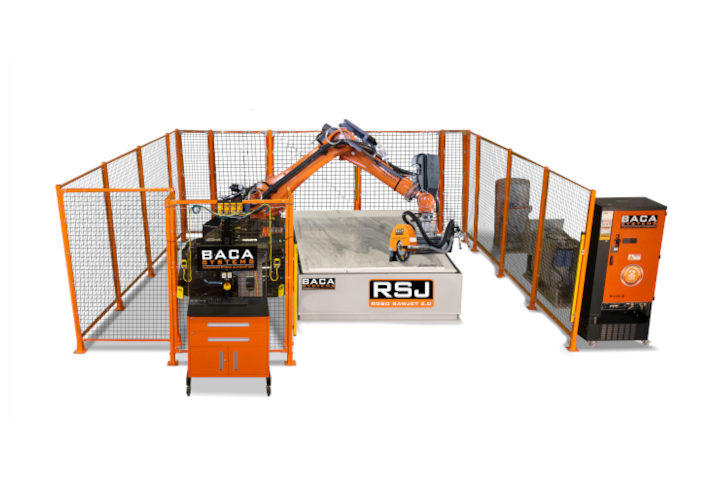
BACA’s Robo SawJet documentation describes a robotic cutting system combining a saw with a high-pressure waterjet. The product page identifies a 26-horsepower saw motor, a variable-frequency drive and access to the table from three sides.
Those details suggest a useful way to evaluate the machine: as a cutting cell that has to fit the shop’s material flow. The table, loading access, operator position and downstream work matter alongside the cutting process itself. Published manufacturer claims are a starting point for that discussion, not a measured result from this publication.
Bring a representative job to the demonstration
Choose a drawing that includes the shapes your shop routinely produces, and ask the vendor to explain the proposed sequence. Discuss where blade cuts end, where waterjet work begins and what operations remain after the parts leave the table.
Map the loading and unloading area against the actual building. Include the handling equipment, staging space and maintenance access in the conversation. A compact machine footprint alone does not describe the complete area needed to keep work moving.
Finally, ask for the configuration, utilities, training and support scope in writing. This makes competing proposals easier to compare and gives the team a clearer picture of how the selected system would become part of daily production.
Source
Product records for this article
- Robo SawJet 2.0 — sources, check date and demonstration questions
Original product reference based on the linked manufacturer documentation. Product images identify the subject; we have not independently tested the equipment or material.
Editorial approach & corrections →