Countertop software inventory comparison
Warehouse control, material commitments and remnant reuse: SlabOS, Stonify, Moraware, ActionFlow and Stone Profit Systems.
Originally published by SlabOS as The Fab Review, reviewed September 14, 2026. AI-assisted editorial review requested by SlabOS. Based on documentation and supplied evidence; no hands-on comparative testing. Republished here from the supplied PDF; descriptions of source-code inspection and the editorial verdict belong to that original review.
Originally published by SlabOS as The Fab Review, reviewed September 14, 2026. AI-assisted editorial review requested by SlabOS. Based on documentation and supplied evidence; no hands-on comparative testing. Republished here from the supplied PDF; descriptions of source-code inspection and the editorial verdict belong to that original review.
Can you find it, promise it and use it?
A slab listed as "in stock" can still be missing, damaged or promised to another customer. Inventory software must connect stone, commitments and value. SlabOS connects warehouse visibility, crew workflows and production labeling.
Consider this illustrative scenario, not an executed test: order eight matching slabs; receive six; photograph damage on one; rack them; hold two for a quote; convert that quote into a job; cut the material; install the counters; return a reusable remnant; then investigate a stocktake discrepancy. The software must preserve identity through every handoff.
SlabOS: connect the yard to the job
SlabOS's clearest distinction is its visual warehouse map 1. Building outlines, bays and racks connect to searchable slab records and occupancy counts. The crew can find a physical location instead of interpreting a location code. This is recorded placement, however: moving stone without recording the move still makes the map wrong.
Supplied screenshots and source show detailed slab records: material/color, thickness, finish, stock type, serial, lot/bundle, received date, supplier, location, job assignment and cost per square foot. Images, condition notes and a journey/history view accompany direct Consume, Create Remnant and Print Label actions. Receiving, sales and production can work from the same piece's identity and context.
A read-only inspection of SlabOS's supplied repository confirmed substantive inventory functionality behind that presentation. Partial PO receiving creates individually identified stock and receipt records. Quotes can hold specific slabs, with checks against conflicting holds and allocations; conversion into a job transfers those commitments. Material selection connects inventory to drawing and nesting workflows. These are implemented controls, although simultaneous-user reliability was not tested.
SlabOS: scanning, labels and remnants
The source also confirms a native iOS crew workflow for slab photography, proportion-based cropping, receipt/editing, warehouse lookup and phone-camera QR/barcode scanning. Web crew screens add damage categories, notes, photographs and optional staff notifications. Full damage-reporting parity in the native app was not established. A cropped photo should not be mistaken for automatically measured usable stone.
Count and move sessions distinguish duplicate, unknown, changed and unseen items. Pending reads can survive interrupted connectivity, but synchronization and review precede confirmation; an unseen slab is not silently written off. Native RFID reader integration is also implemented. Compatible hardware, tag setup and availability in the customer's crew app still require demonstration. SlabOS publicly describes its QR, barcode and RFID labeling options 2.
From whole slabs to cut pieces
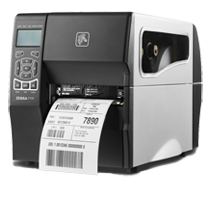
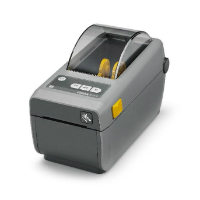
Inventory labels have editable content and dimensions, printer profiles and preview, with system/PDF, Crew and Zebra output paths. Enabled QR, barcode and RFID identifiers can resolve to one inventory record. Scan defaults and printer/rack settings are configurable.
Separate piece labels extend identification into fabrication: capture a drawing or add a piece manually, associate room, material, color, thickness, edge and fixture notes, then prepare selected labels. The face/edge designer supports custom sizes, orientation, resolution, drawings, QR codes and QC fields. Saved revisions and prepared batches support reprinting the original contents. This can keep a cut part associated with its job and drawing through production and installation. The supplied interface marks Piece Labels as Demo beta; availability and printer performance remain to be verified.
Remnant identity is only part of the job
Remnants receive separate identities linked to their parent and can retain condition information. Manual entry uses dimensions, photographs and notes. Automatic irregular-outline capture, immutable damage history, damaged-area exclusion and complete receipt-to-remnant financial reconciliation remain unverified. The advertised Slabsmith bridge 3 is early access; the supplied settings also show a read/write configuration, so buyers should verify the exact synchronization scope delivered.
Where the alternatives compete
Stonify
Stonify is a serious competitor here. Its inventory documentation 4 covers individual barcodes, supplier lots, bundles, dimensions, bins, transfers, damage photographs and landed costs. Its drawing workflow explicitly puts selected inventory on hold for a quote and allocates it to a deal. Stocktake documentation addresses inventory changing while a count is underway, a useful acknowledgment that production does not stop for counting. Workflow and audit release notes 5.
For our damaged delivery, Stonify documents a damage credit affecting landed cost 6. Its September release adds remnant-dimension synchronization from Horus or Slabsmith 7, an external integration. That matters to shops already digitizing stone. A comparable visual warehouse map and a complete condition chronology remained unverified. Its QuickBooks connector is specifically journal-entry ledger synchronization 8, requiring account mapping.
Moraware Inventory + Systemize
Moraware requires product precision: this comparison concerns current Inventory with Systemize 9; CounterGo supplies drawing and quoting. Its documented sequence covers ordering, receiving, allocation, consumption and remnants 10. Releasing unused material restores availability while retaining the original job's unmet material requirement. That is a useful safeguard against solving one shortage by forgetting another. Release behavior 11.
Moraware's manual irregular-remnant entry 12 also relies on dimensions, notes and photography. Configured slab-scanner integration 13 can create parent-linked remnant records, requiring provider setup and a paid API user. Confirm current-product compatibility for external barcode tools. Expiring quote-only holds, native visual mapping and comprehensive damage history were not established by the reviewed documentation.
ActionFlow
ActionFlow's case is production coordination backed by material reporting. It documents purchasing, project allocations and remnant return 14, plus mobile barcode inventory checks 15. Its reporting reference covers receiving worksheets, pending transfers, used/cut/waste quantities, adjustments, valuation and job costs. Those reports can expose where our six received slabs went. Their existence does not establish that every transaction reconciles correctly. Reporting reference 16.
Inventory sits in ActionFlow's Process subscription; Performance adds multi-facility capability. Current packages 17. Slabsmith and QuickBooks are integrations 18. Implementation should account for its Windows application 19. Quote-hold enforcement, damaged-stock restrictions and partial-receipt exceptions warrant a live walkthrough.
Stone Profit Systems
Stone Profit Systems provides the strongest public purchasing-and-accounting documentation in this comparison. Its receiving sequence 20 joins supplier paperwork, lots, bundles, actual dimensions, bins, serialized labels and freight costs. Multiple packing lists against a PO 21 accommodate staggered arrivals. Our two undelivered slabs therefore have a documented place in the process. SPS explicitly distinguishes product quantities from specific slab allocations 22: assigning actual items removes them from availability, while invoicing removes them from current inventory. Buyers must align that accounting event with physical cutting and installation. Its Fabricator offering documents dimensioned remnants, transfers, permissions, valuation and native accounting 23; mobile counting 24 supports reconciliation. The separate Distributor offering 25 merits attention for wholesale and consignment operations. Full damage chronology and automatic capture of irregular usable outlines still need demonstration.
The shortlist, with conditions
| System to evaluate | Evidence-backed reason to shortlist | Buying condition |
|---|---|---|
| SlabOS 26 | Warehouse map, crew scanning, holds, remnant lineage and customizable inventory/piece labels | Verify RFID, piece-label beta availability and cost reconciliation; unlimited users is vendor-stated |
| Stonify Full ERP 27 | Inventory-linked drawings, holds, audits and financial workflows | Separate native functions from scanner integrations |
| Moraware Inventory + Systemize 9 | Job-centered material commitments and consumption | Add CounterGo and compatible integrations where needed |
| ActionFlow Process / Performance 17 | Production reporting and inventory operations | Multi-facility requires the appropriate package |
| SPS Fabricator / Distributor 23 | Purchasing, allocations and accounting depth | Match edition and implementation scope to the business |
The editorial verdict
My verdict: a small or growing fabrication shop struggling to find stone and keep office commitments aligned with the yard should put SlabOS high on its demo list. Stonify deserves direct comparison for integrated fabrication finance; existing Systemize shops should evaluate Moraware's extension before replacing everything. ActionFlow suits process/reporting priorities. SPS deserves first attention where complex purchasing, distribution or accounting dominates.
Run the same delivery-to-remnant scenario in each finalist. Have two users request the same slab; cancel a hold; move stock during a count; reconcile purchase cost, consumption, waste and remnant value. Check thickness, finish and lot continuity, correction permissions, movement history and integration mappings. The winner is the system that resolves those exceptions clearly enough for the crew to trust it.
Methodology
Methodology - September 14, 2026: SlabOS requested this review. Evidence comprised current official product pages, help articles, release notes and illustrated workflows for all five vendors, plus supplied SlabOS interface screenshots and permissioned source inspection. No hands-on product, hardware or comparative transaction testing occurred. Screenshots and implementation do not prove operational reliability. The scenario is illustrative; missing documentation means unverified, not unavailable. No private code or customer information is reproduced.
Sources and evidence
Public sources reviewed September 14, 2026. Numbers match the article. Vendor documentation establishes stated capabilities, not independent performance results.
- 1. visual warehouse map
- 2. QR, barcode and RFID labeling options
- 3. Slabsmith bridge
- 4. inventory documentation
- 5. Workflow and audit release notes
- 6. damage credit affecting landed cost
- 7. remnant-dimension synchronization from Horus or Slabsmith
- 8. journal-entry ledger synchronization
- 9. Inventory with Systemize
- 10. ordering, receiving, allocation, consumption and remnants
- 11. Release behavior
- 12. irregular-remnant entry
- 13. slab-scanner integration
- 14. purchasing, project allocations and remnant return
- 15. mobile barcode inventory checks
- 16. Reporting reference
- 17. Current packages
- 18. integrations
- 19. Windows application
- 20. receiving sequence
- 21. Multiple packing lists against a PO
- 22. specific slab allocations
- 23. dimensioned remnants, transfers, permissions, valuation and native accounting
- 24. mobile counting
- 25. Distributor offering
- 26. SlabOS
- 27. Stonify Full ERP
Additional supplied evidence
SlabOS supplied interface screenshots of its slab editor, inventory-label preview, drawing-based piece-label preparation, scanning settings and face/edge label designer, plus permissioned, read-only source access. These establish interface and implementation evidence, not executed printing or inventory tests. No private code, internal identifiers, customer records or account details are included.
Originally published by SlabOS as The Fab Review, reviewed September 14, 2026. AI-assisted editorial review requested by SlabOS. Based on documentation and supplied evidence; no hands-on comparative testing. Republished here from the supplied PDF; descriptions of source-code inspection and the editorial verdict belong to that original review.
Editorial approach & corrections →