SlabVision: connect the slab image to the slab that gets cut
A digital image is most useful when purchasing, layout and production share the same material identity.
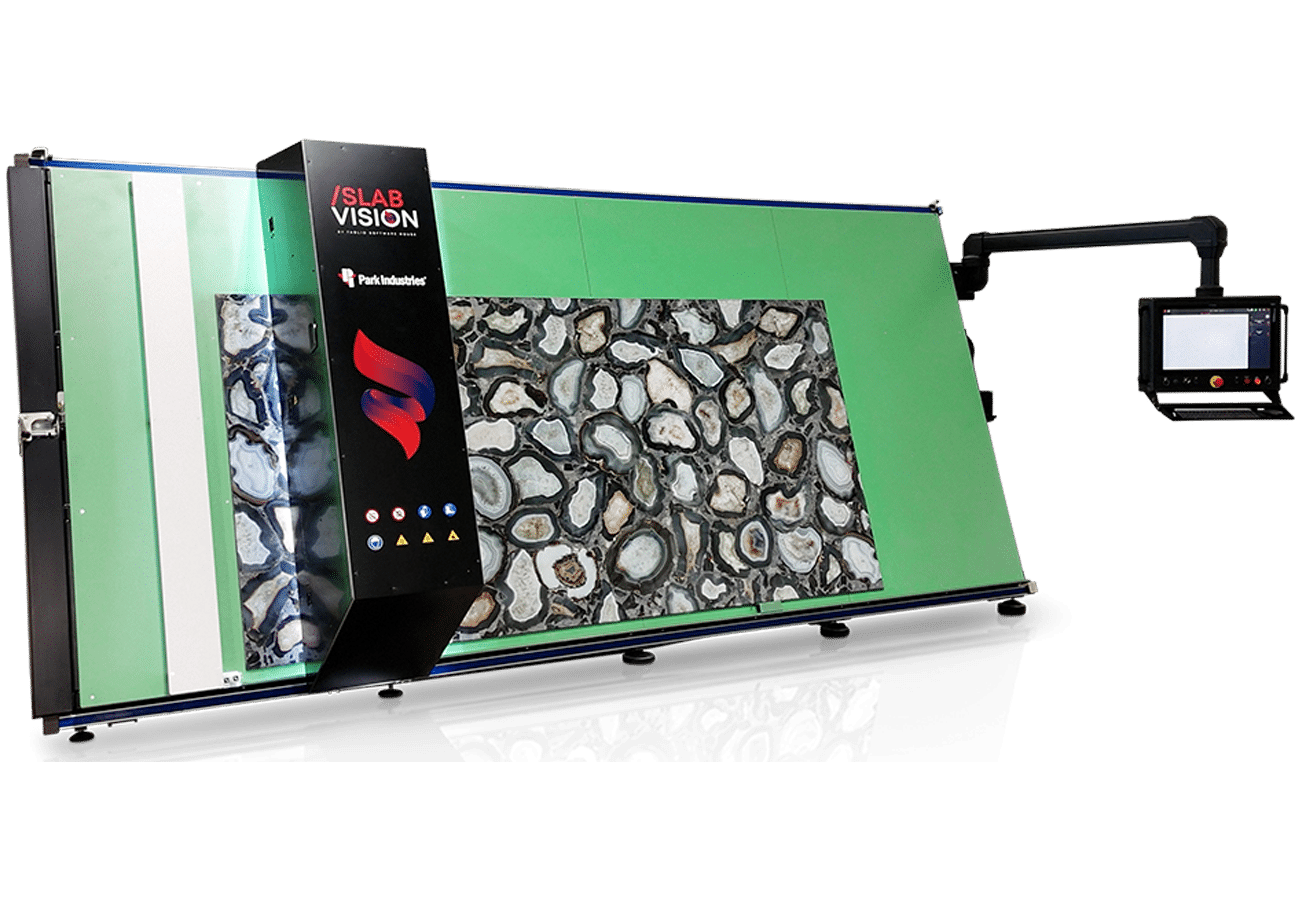
A digital image is most useful when purchasing, layout and production share the same material identity.
SlabVision is Park’s vertical slab scanner. The manufacturer describes a camera, controlled LED lighting and a compact scanning arrangement intended to create digital slab records. For a fabrication shop, the practical value depends on keeping each image connected to the physical slab and the approved job layout.
Start with identification
Use a consistent slab identifier at receiving and preserve it through scanning, allocation and cutting. Record enough supplier and material information to distinguish similar slabs. A descriptive filename alone is fragile if several people can create or rename files independently.
When a customer approves a layout, retain the exact image and drawing revision used. A substitute slab should trigger a new review of the visible pattern and proposed part placement. The scanner’s product image is not a replacement for that job-specific approval record.
Close the loop after cutting
Update the material record when the slab becomes finished parts and remnants. Identify which portions remain available and where they are stored. During a demonstration, ask the supplier to follow one slab through capture and the intended downstream tools, using the proposed configuration. The goal is a traceable connection between material selection and production. High-resolution imagery supports that connection; consistent identifiers and revision control keep it intact when plans change.
Source & further reading
Original product reference based on current manufacturer documentation, checked 2026-09-14. Configuration and application need confirmation with the supplier; no independent equipment test is claimed.
Editorial approach & corrections →