VOYAGER XP: what changes when the bridge saw becomes a CNC workstation
Look beyond the cutting head when planning a move from manual layout to digital fabrication.
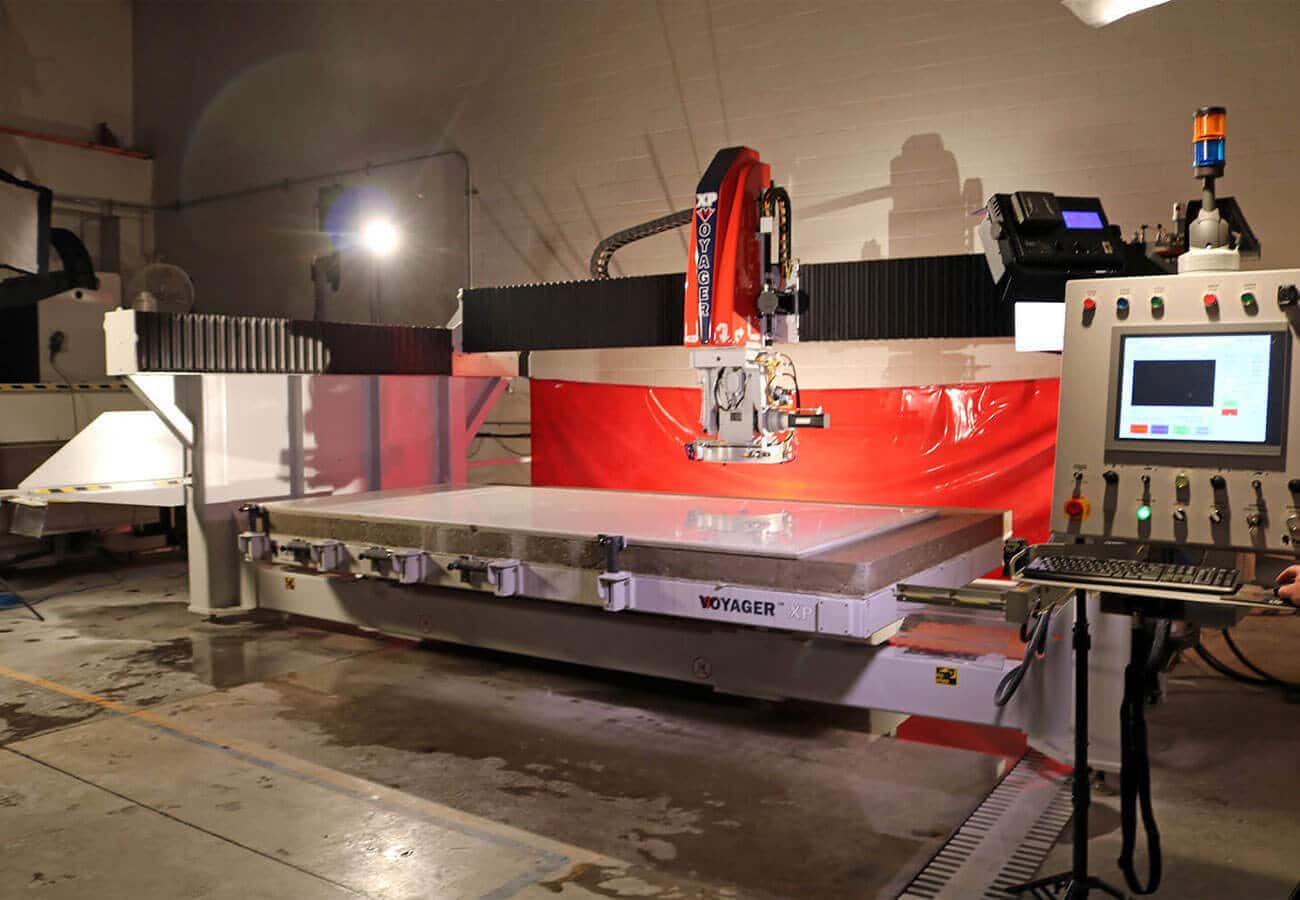
Look beyond the cutting head when planning a move from manual layout to digital fabrication.
The VOYAGER XP is Park’s five-axis CNC saw. Its current product page describes a 27-horsepower motor, TightCut blade-plunging capability and a separate spindle connection for operations such as incremental routing and coring. This makes it worth examining as a workflow change, rather than treating it as a faster version of an existing manual saw.
Decide who prepares the work
In a manual shop, the saw operator may resolve many drawing questions while looking at the slab. Moving into CNC creates a more explicit preparation stage. Someone needs to confirm the approved drawing, material identity, part orientation and program revision before the machine is scheduled to run.
Walk a completed job backward with the operator and programmer. Identify the decisions currently made at the table, then agree which belong in the digital job packet. Keep the exceptions visible: unusual material, a revised cutout or a customer’s approved vein position can change the preparation needed.
Test the handoff, too
During a demonstration, ask to see a representative file become a finished set of labeled parts. Include the work left for routing, polishing and inspection. The useful comparison is the whole job’s path through the shop, supported by a written machine configuration and an operator-training plan. Manufacturer features describe capabilities; the shop still needs a repeatable way to supply correct work.
Source & further reading
Product records for this article
- VOYAGER XP — sources, check date and demonstration questions
Original product reference based on current manufacturer documentation, checked 2026-09-14. Configuration and application need confirmation with the supplier; no independent equipment test is claimed.
Editorial approach & corrections →